Ant or Termite? How to Identify Spring Swarming Insects in Middle Tennessee
The March Phenomenon: Why are there flying bugs in my house?
It’s a beautiful, rainy March afternoon in Murfreesboro. You’re looking out the window, enjoying the sight of the first spring blooms, when you suddenly notice a cloud of dark, winged insects crawling near the windowsill. Perhaps they are emerging from a baseboard in the hallway or hovering around a door frame. It’s a sight that can make any homeowner’s heart sink.
The immediate question is: Is it just a harmless flying ant, or are you looking at a subterranean termite swarm? In Middle Tennessee, March is the official kickoff for termite swarm season. As the ground warms and the spring rains saturate the earth, “reproducives” (also known as alates) emerge to start new colonies. Knowing how to identify these pests quickly is the first step in protecting your home from structural damage. Because termites are “silent destroyers,” a swarm is often the only visible sign you will ever get that your home is under attack.
How can I tell the difference between a flying ant and a termite?
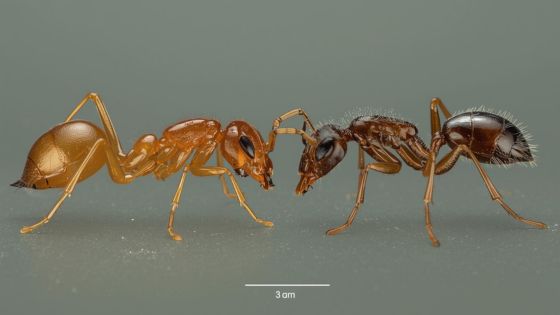 If you are using voice search to find an answer quickly, or if you have managed to catch one of these insects to inspect it, look for these three distinct physical markers. These are the “Big Three” characteristics that pest professionals use to tell them apart.
1. The Waistline
This is often the easiest feature to spot if you have a steady hand.
-
Ants: Ants have a very distinct, “pinched” waist. It looks like a narrow thread connecting their thorax to their abdomen.
-
Termites: Termites have a broad, straight body. Their “waist” is the same width as the rest of their body, giving them a more rectangular or cigar-shaped appearance.
2. The Wings
While both insects have four wings, the way those wings are shaped and sized is a dead giveaway.
-
Ants: An ant’s front wings are significantly larger and longer than its back wings.
-
Termites: A termite’s four wings are all exactly the same size and shape. Furthermore, termite wings are typically twice as long as their actual body and will often break off easily, leaving “discarded wings” on your windowsills.
3. The Antennae
You might need a magnifying glass for this one, but it is a definitive marker.
-
Ants: Ants have “elbowed” antennae. They have a distinct bend or joint in the middle, much like a human arm.
-
Termites: Termites have straight, “beaded” antennae. They look like tiny strings of pearls stretching out from their heads.
Why do termites swarm in Middle Tennessee in March?
You might wonder why these insects choose a rainy day in March to make their grand appearance. Subterranean termites, which are the most common species in Tennessee, live in large colonies deep underground where moisture levels are high.
When a colony reaches maturity (usually after three to five years), it produces “swarmers.” These are the kings and queens of the next generation. They wait for very specific weather conditions: temperatures above 60 degrees and a significant rain event. The rain softens the soil, making it easier for them to emerge, and the high humidity ensures they don’t dry out while searching for a mate.
If you see a swarm inside your home, it almost always means they emerged from a colony already living within your walls or foundation. They aren’t trying to get in; they are trying to get out to start new families.
What Homeowners Ask Most
To help our neighbors get fast, accurate information, we’ve compiled the most common questions people ask their voice assistants during the spring.
-
“What should I do if I find discarded wings on my windowsill?” Finding piles of small, translucent wings is a major red flag. This means a termite swarm has already occurred, and the insects have shed their wings to begin the process of nesting. You should call for a professional inspection immediately.
-
“Do termites swarm at night or during the day?” Subterranean termites in Tennessee typically swarm during the daylight hours, particularly on warm mornings following a rainy night.
-
“Is a termite swarm dangerous to my family?” While swarming termites do not bite, sting, or carry diseases that harm humans or pets, they are a massive “danger” to your financial well-being. They cause over $5 billion in property damage in the U.S. every year.
-
“Does homeowners insurance cover termite damage?” In almost all cases, the answer is no. Most standard insurance policies view termite damage as a preventable maintenance issue, which is why proactive protection is so important.
The Absolute Solution: Proactive Protection
Finding a swarm is stressful, but you don’t have to face it alone. At Absolute Pest Control, we take termite management seriously. We don’t just “spray and pray”; we use the most advanced technology to locate the source of the infestation and eliminate it at the colony level.
Our team provides:
-
Thorough, Honest Inspections: We walk your foundation, crawl space, and interior to find the hidden signs of activity.
-
Customized Treatment Plans: Every home in Middle Tennessee is built differently, and we tailor our protection to your specific structure.
-
Absolute Integrity: We’ll give you the facts, plain and simple, and work with you to protect your biggest investment.
Don’t let the “silent destroyers” take a bite out of your home this spring. Call Absolute Pest Control today at 615-220-1933 to schedule your professional termite inspection.
Absolute Service. Absolute Results. Absolute Integrity!
Still undecided? Read our reviews HERE.